If you're reading this, chances are someone sent you a PK365 link at midnight, or you saw an ad promising fast money and your gut said "wait, let me check this first." Good instinct. Real-money apps get cloned, copied, and impersonated constantly, and the question "is PK365 real or fake" shows up in search bars every single day for exactly that reason. We're not the people who built PK365, so we're not going to hand you a fake stamp of approval or a scary warning just to get clicks. What we can do is walk you through the same checks we'd run on any app before trusting it with our phone number, our bank details, or our time.
Why this question is worth asking in the first place
Apps that involve real money - deposits, withdrawals, cash prizes - are the single most cloned category on the internet. Scammers don't need to build anything original. They just copy a popular app's name, logo, and colors, throw up a fake site, and wait for people to search the brand name and click the first result. This happens to banking apps, delivery apps, and yes, gaming apps like PK365. So asking whether something is real before you hand over information isn't paranoid. It's basic digital hygiene, the same way you'd check a lock before walking into an unfamiliar building.
Start with the door you walked through
Before anything else, think about how you actually got here. Did you type the name into Google yourself, or did someone drop a link in a WhatsApp group, a Facebook comment, or a random SMS? That matters more than people realize. A link shared by a stranger in a group chat has zero verification behind it - anyone can type a URL that looks close enough to the real one and hope you don't notice.
Open the address bar and read the domain slowly, letter by letter. Scam pages love small tricks: swapping a lowercase L for a capital I, adding an extra word, using a different domain ending than the real site. If you're not sure which domain is the genuine one, our latest version download guide lists the sources we consider safest to start from, and it's worth bookmarking once you've confirmed it so you never have to search for it again.
Look past the icon - check what's actually behind it
Anyone can design a nice-looking icon in an afternoon. What's harder to fake is a consistent track record. On the Play Store listing, tap through to the developer's name and see what else they've published. A single-app account created two weeks ago, with a generic name like "Studio App 2026" and a broken or missing privacy policy link, is a pattern worth being cautious about - and that's true for any app category, not just this one.
It's also worth glancing at how long the app has actually existed. A brand with years of search history, steady traffic, and an established web presence behaves very differently from something that popped up last month wrapped in urgency ("limited slots," "today only," that sort of language). Urgency is a classic pressure tactic, and legitimate platforms rarely need it to get people through the door.
Reviews help - but only if you read them properly
Both the Play Store and third-party sites like Trustpilot show reviews for PK365, and reviews genuinely are useful - just not in the simple "more stars equals safer" way most people use them. Review manipulation cuts both directions in this space. Some listings get flooded with fake five-star reviews to look trustworthy. Others get hit with coordinated one-star bombing from competitors or unhappy affiliates. Neither extreme tells you much on its own.
What actually helps is reading the reviews in the middle - the detailed, specific ones. A review that says "withdrawal took 6 hours and support replied within 20 minutes" is worth ten times more than a one-word "scam!!!" or "best app ever!!!" with no detail behind it. Look at the dates too. Reviews spread naturally across weeks and months look organic. A wall of reviews all posted on the same day looks bought, in either direction.
The 30-second permission check anyone can run
Here's a technical check that takes almost no effort. Go to your phone's Settings, then Apps, find the app in question, and look at Permissions. Ask yourself a simple question for each one: does a gaming or earning app actually need this? Camera and storage access, sure, that's normal for uploading a profile photo or saving a screenshot. SMS access, contact list access, or accessibility service permissions are a different story - there's no good reason a slots or mini-games app needs to read your text messages or see who's in your contacts.
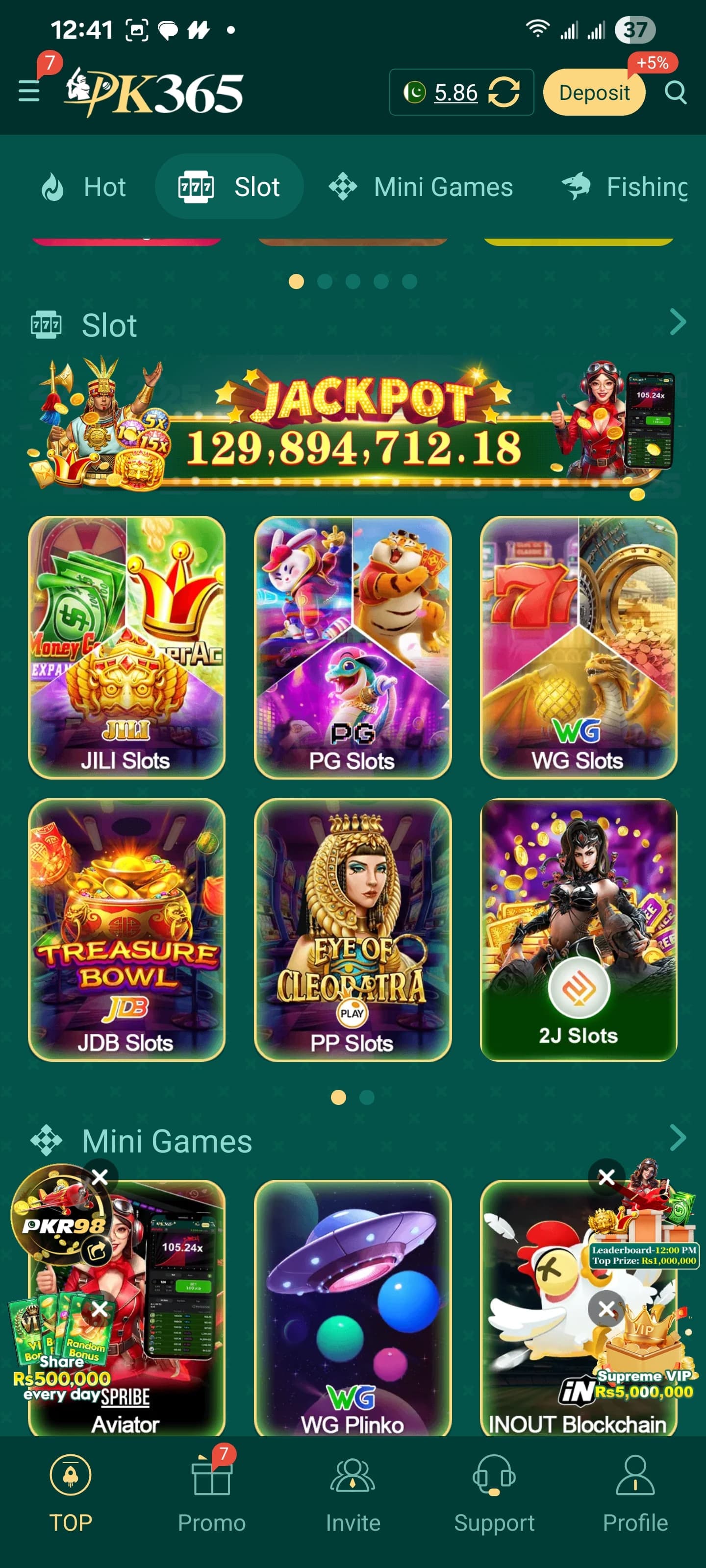
A polished, consistent interface like the one above isn't proof of anything by itself - plenty of scam apps have decent design skills too. But it's one more data point, and combined with the checks above, it starts painting a picture. None of these checks alone guarantee anything. Together, they get you most of the way to a confident answer.
The one rule that matters more than everything else combined
If you only remember one thing from this whole article, make it this: no real support agent, on any platform, for any app, will ever ask for your one-time password, your account password, or your card PIN. Not by call, not by chat, not by DM. The moment someone claiming to represent PK365 asks for one of those, you're dealing with a scammer - full stop, regardless of whether the underlying app itself is legitimate. Scammers frequently target real, legitimate platforms by impersonating their support team, because it's easier than building a fake app from scratch. Keep your OTP to yourself, every time, no exceptions. If you ever need to reach a real person, go through the channels we've listed on our support page rather than trusting whoever messages you first.
Already installed it and now having second thoughts?
This happens a lot - you install something quickly, then a nagging feeling kicks in afterward and you start searching to double-check. If that's you, don't panic; work through it calmly instead. Go back through the checks above on the app you actually have installed: check the developer name on its Play Store entry, glance at the permissions it's been granted, and check whether you've shared any password or OTP with anyone since installing it. If the answer to that last one is no, you haven't actually exposed anything yet, even if the app itself turns out to be one you'd rather not keep.
If anything still feels wrong after checking, uninstalling costs you nothing - long-press the icon and remove it, the same as any other app. And if you did share a password anywhere you now regret, go change that password immediately, on this account and anywhere else you reused it, since password reuse is exactly what turns one bad moment into several.
So - is PK365 real or fake?
Honestly, we can't hand you a one-word verdict, and we'd be lying if we pretended otherwise - we're an independent guide, not the developer, and anyone claiming absolute certainty from outside the company is guessing. What we can tell you is that PK365 does have a real Play Store presence, an established web footprint going back years, and public reviews across multiple platforms, which puts it in a very different category from a fly-by-night app that appeared last week. That's a meaningfully different starting point than a fresh clone with no history.
Run the checks in this article yourself. Look at the domain, look at the developer history, read a handful of detailed reviews, glance at the permissions list, and never, ever share your OTP. If everything checks out, our download and install guide walks you through getting the app safely, and our login help guide covers what to do once you're in. If something feels off at any point, trust that feeling and walk away - there's no prize worth handing a stranger your password for.
PK365 APK Hub Editorial Team
We're an independent team covering PK365 downloads, login help, and account safety — not the developer, and not officially affiliated with PK365. Every guide is checked against the app's actual current screens before publishing, and updated when something changes.
Last reviewed September 1, 2026
Independent guide - not affiliated with, endorsed by, or an official representative of PK365. Always verify details against the official app and website.